

If you want your business to run better, four changes do most of the heavy lifting: move your bookkeeping to the cloud, switch to digital record-keeping, separate your business and personal money, and bring in a professional bookkeeper. None of them is dramatic on its own. Together they hand you back time, sharpen your numbers, and — with Making Tax Digital arriving for sole traders and landlords from April 2026 — get you ahead of the rules instead of scrambling after them.
This is a 2026 update of one of our most-read guides. The principles haven't changed, but the context has: the tools are better, automation is mainstream, and digital records are becoming a legal requirement rather than a nice-to-have. Here's what each change involves and why it's worth making now.
The four changes at a glance
- Move to cloud bookkeeping — automate the data entry and see your numbers in real time.
- Go digital with records — paperless, searchable, and ready for Making Tax Digital.
- Separate business and personal finances — cleaner books, fewer missed claims, less risk.
- Work with a professional bookkeeper — reclaim your time and get numbers you can act on.
Why running your business better matters more in 2026
Small businesses are the UK economy: around 5.5 million businesses with fewer than 50 employees make up 99.2% of all UK firms. Yet the gap between the most and least efficient is widening. Office for National Statistics data shows firms in the top tier now produce roughly 3.5 times the output per worker of the median firm — up from 2.9 times before 2008. In other words, the businesses that get their operations and numbers right are pulling away from those that don't.
Admin is a big part of the problem. In one survey, 47% of small business owners said they spend too much time complying with regulations, and 69% said compliance costs them more per employee than it does larger competitors. Weak financial control has consequences, too: one analysis found forced company closures rose 660% over four years, concentrated in exactly the low-margin, labour-intensive sectors — retail, hospitality, personal services — where cashflow is tightest. Time you claw back from admin, and tighter control of your numbers, are not luxuries; they're survival tools.
Change one: move your bookkeeping to the cloud
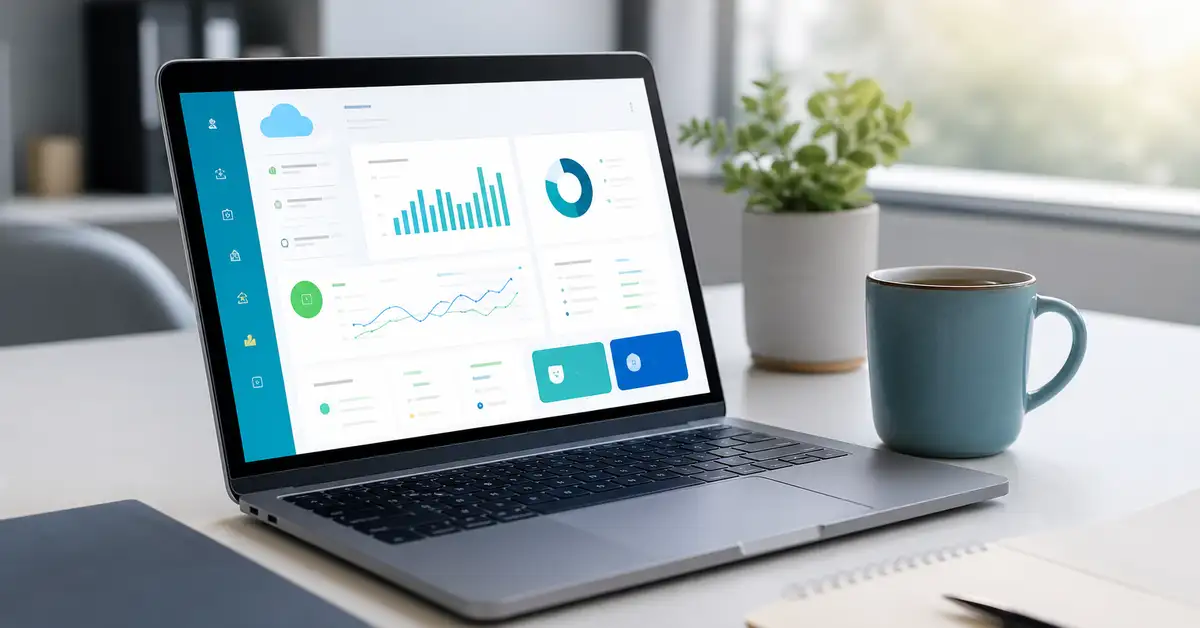
The single highest-impact change is moving off spreadsheets, shoeboxes and desktop software onto a cloud accounting platform like Xero. Cloud bookkeeping connects directly to your bank, pulls transactions in automatically, and uses rules and AI to categorise them — so the books stay current without hours of manual entry.
UK businesses are already moving this way. The government's Longitudinal Small Business Survey found 69% of SME employers now use web-based software to run their business, up from 50% just two years earlier. But adoption is uneven: among sole traders and partnerships filing Self Assessment, 65% use record-keeping software while 46% still rely on spreadsheets and 57% on paper. Many businesses are running duplicated, half-digital systems — which is the worst of both worlds.
29 days
Average time UK small businesses wait to be paid after invoicing (Xero, March 2025 quarter) — the fastest since 2017, but still 29 days where cloud tools with automated invoicing and reminders can help close the gap.
The payoff is twofold: less time on data entry, and decisions based on today's figures rather than last quarter's. As a Xero Gold Partner, Fantail Accountancy sets cloud systems up properly — connecting bank feeds, bill-capture tools and your point-of-sale — so the busywork disappears. You can read more on our cloud accounting & Xero setup and bookkeeping pages.
Change two: go digital with your record-keeping
Going paperless isn't just tidy — it's about to be the law for many. Receipts captured by phone, invoices stored against transactions, and documents you can search in seconds replace the filing cabinet and the year-end scramble. Done well, every figure in your accounts links back to a digital source document.
This matters because Making Tax Digital (MTD) requires digital records and "digital links" between the software you use — no more re-keying figures from one system into another. MTD for VAT has applied to all VAT-registered businesses since April 2022, and MTD for Income Tax begins rolling out from April 2026 (see the timeline below). The practical message is simple: record-keeping needs to be continuous, not something you do once a year. Bank feeds and bill capture make that effortless. Our VAT & compliance service keeps you on the right side of these rules.
Change three: separate your business and personal finances
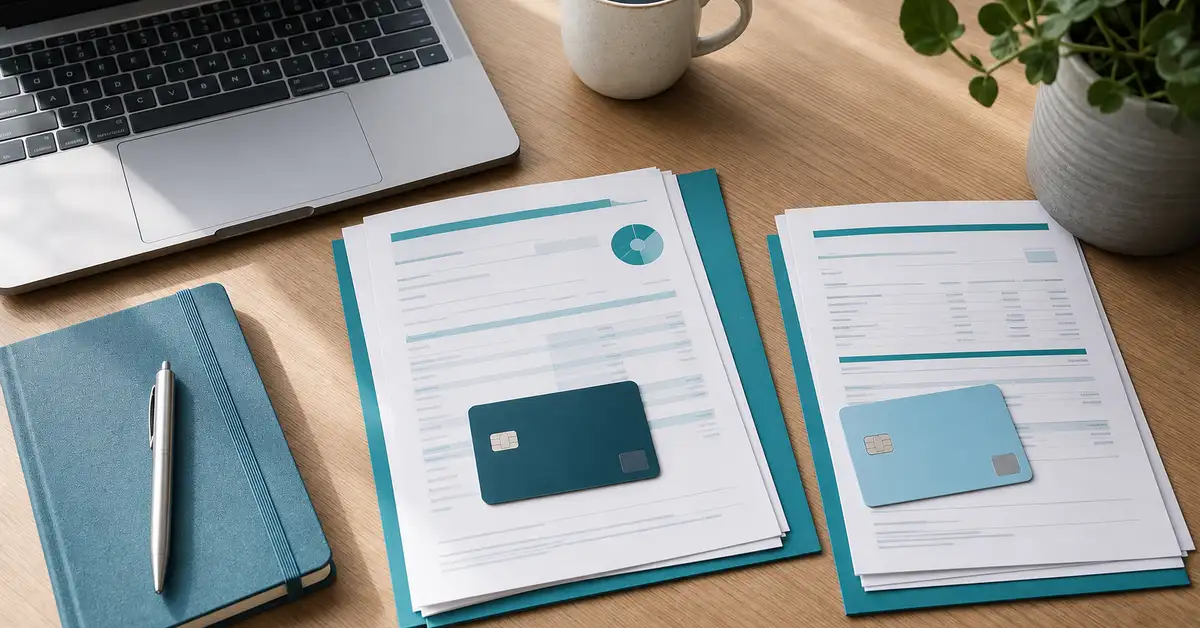
Mixing business and personal money is one of the most common — and most costly — habits we see. When everything runs through one account, you have to pick apart business from personal weeks or months later, usually from fading memory. The result is missed expense claims (and a higher tax bill), or disallowed claims that create risk if HMRC asks questions.
HMRC is clear that taking business money for personal use isn't an allowable expense — for sole traders it's drawings, not a deductible cost. A separate business bank account isn't legally required for sole traders, but HMRC and the professional bodies strongly recommend it because it makes compliance simpler and reduces error.
For limited companies it isn't optional: the company is a separate legal person, its money must sit in its own account, and money taken out has to be treated correctly as salary, dividends, expenses or a director's loan. An overdrawn director's loan account can trigger tax charges and real problems if the company hits difficulty — so clean separation protects you as well as your books.
Change four: work with a professional bookkeeper
You didn't start your business to do data entry. Bringing in a professional bookkeeper or management accountant is how owners reclaim that time — and it's a growing trend: in 2024, 27% of SME employers sought external advice, with financial matters the most common reason. The right partner doesn't just record what happened; they give you accurate, timely numbers you can actually make decisions with.
A common question is whether you need a bookkeeper or an accountant. In practice most growing businesses benefit from both functions — here's the difference:
| What they focus on | Bookkeeper | Accountant |
|---|---|---|
| Day-to-day records | Records transactions, reconciles the bank, runs invoicing & bills | Relies on accurate books to do their work |
| Reporting & advice | Management accounts, cashflow, real-time numbers | Year-end accounts, tax planning, statutory filing |
| Best for | Keeping the business running smoothly all year | Compliance and big-picture tax decisions |
At Fantail, we combine both: technology-led bookkeeping plus management accounting that explains what the numbers mean. Founder Michaela Zein is a Chartered Accountant (ACA ICAEW) who trained at KPMG, so the advice behind your figures is genuinely senior.
Not sure which mix of support your business needs?
Book a free consultationHow does Making Tax Digital change the picture?
Making Tax Digital for Income Tax Self Assessment (MTD ITSA) is the deadline that pulls all four changes together. If your combined income from self-employment and property is above the threshold, you'll need to keep digital records and send HMRC quarterly updates from compatible software. It's phased in by income:
| From | Who it applies to | Annual income over |
|---|---|---|
| April 2026 | Sole traders & landlords | £50,000 |
| April 2027 | Sole traders & landlords | £30,000 |
| April 2028 | Sole traders & landlords | £20,000 |
A points-based penalty system applies to late submissions, so falling behind has real consequences. The good news: if you've already made changes one to three — cloud bookkeeping, digital records and clean separation — you're effectively MTD-ready, and quarterly updates become a button rather than a burden. Full details are on GOV.UK, and the £20,000 threshold from April 2028 brings many more people in.

How to get started without disrupting your business
You don't need to do everything at once. A sensible order keeps things calm:
Open a dedicated business bank account if you don't have one. This is the cheapest, fastest win and makes everything else easier.
Move to cloud accounting and connect your bank feed, so transactions flow in automatically.
Turn on digital record-keeping — receipt capture and bill automation — so every figure links to a source document.
Bring in a bookkeeper to run it all and turn your numbers into monthly insight.
Frequently asked questions
When does Making Tax Digital for Self Assessment start?
MTD for Income Tax Self Assessment starts on 6 April 2026 for sole traders and landlords with combined self-employment and property income over £50,000. It extends to those over £30,000 from April 2027 and over £20,000 from April 2028.
Who does Making Tax Digital apply to?
All VAT-registered businesses already follow MTD for VAT. From April 2026, MTD for Income Tax applies to sole traders and landlords above the income thresholds above. Limited companies are not yet in scope for MTD for Corporation Tax.
How much does a bookkeeper cost in the UK?
Most small businesses pay a fixed monthly fee based on transaction volume and complexity rather than an hourly rate. At Fantail we use simple, transparent monthly packages — see our pricing — and give you an exact quote after a free consultation.
Do I need a separate business bank account?
If you trade through a limited company, yes — it's a legal requirement. Sole traders aren't legally obliged to, but it's strongly recommended: it keeps your books clean, helps you claim every allowable expense, and makes Making Tax Digital far simpler.
Ready to make your business run better?
Fantail Accountancy helps London businesses move to the cloud, get MTD-ready and get their time back.
Book a free consultationor call (+44) 07754 199911
Sources: ONS, Trends in UK business dynamism and productivity (2025); DBT Longitudinal Small Business Survey 2024; GOV.UK, Making Tax Digital for Income Tax; ICAS, MTD ITSA updates; Xero UK Small Business Insights (2025); ABC Finance, forced company closures (2024).